


A wool coat fits correctly when the shoulder seam ends exactly at your shoulder bone, you can slide a flat hand across your chest when it is buttoned, the sleeves reach just past the wrist, and the hem falls at a flattering, deliberate length. Neither tight nor shapeless — structured ease is the goal.
Why Fit Matters More on a Coat Than on Any Other Layer
A coat is the outermost thing people see, and it sits over everything else you are wearing. A poor fit at the shoulder, in particular, cannot easily be fixed. As tailoring guides consistently note, shoulder width is the one measurement that is difficult and expensive to alter, so it is worth getting right before you buy. Sleeve length can be shortened by a tailor, and the chest can be taken in modestly — but structural changes to the shoulder cannot be made reliably.
Six Fit Checkpoints to Work Through
1. Shoulder seam
The seam should end precisely where your natural shoulder bone ends — not beyond it, not inside it. If the seam hangs past the top of your arm, the sleeve falls lifelessly. If it pulls inward, the chest will strain. This is the single most important fit point on any coat.
2. Chest and layering room
A well-fitting wool coat leaves enough room through the chest to slide your flat hand between the fabric and your body when it is fully buttoned. You need enough built-in ease to accommodate the layers you actually wear underneath — fine knits require less room, while a blazer or chunky sweater requires noticeably more. Neither so snug it pulls, nor so roomy it billows.
3. Sleeve length
Coat sleeve length should reach at or just past the wrist bone, covering the wrist in cold weather without the sleeve swamping your hand. If sleeves sit noticeably above the wrist, the coat is too small; if they extend well past the thumb knuckle, they are too long, though a tailor can shorten them.
4. Hem length
There is no single correct hem length — it depends on the coat style and your proportions. A midi-length coat typically falls somewhere between mid-thigh and below the knee; a full-length overcoat reaches toward the ankle. The one consistent rule: avoid a hem that ends exactly at the kneecap, as it tends to interrupt the vertical line of the body.
5. Buttoning without strain
Button the coat fully and check that the fabric lies flat across the chest and stomach — no pulling between buttons, no visible gap at the placket. Unlike a blazer, a coat needs to close cleanly over whatever you are wearing underneath. If it strains when fastened over a thick knit, it is too small for cold-weather use.
6. Movement test
Raise both arms overhead, then stretch them forward and out to each side. Sit down. Turn left and right. A well-fitting coat should move with you rather than pulling at the shoulders or riding up at the back. If it restricts you noticeably in a fitting room, it will restrict you every single day you wear it.
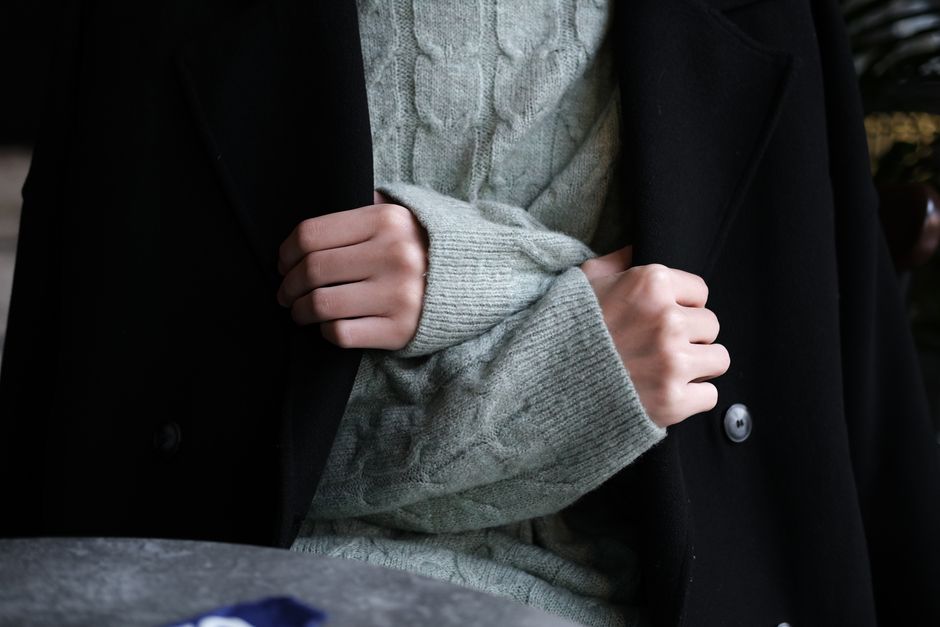
The Most Useful Tip: Try It Over Your Thickest Layer
Always try a wool coat — or assess your measurements — wearing the thickest combination you intend to put underneath it. A coat that looks perfect over a thin T-shirt in a fitting room may be unwearable over a chunky knit in January. Fit the coat to your real-life wardrobe, not to an idealised one.
If you are shopping online and cannot try before buying, prioritise matching your shoulder measurement above everything else, since sleeve length can be adjusted by a tailor and the shoulder cannot.

Related Questions
How much room should a coat have in the shoulders?
The shoulder seam should align with the end of your natural shoulder bone — no overhang, no pinching inward. If the seam sits wide of your shoulder, the coat looks borrowed and the sleeve hangs poorly. If it sits inside your shoulder point, the upper arm binds and the chest pulls. This is the fit point to protect above all others.
How long should coat sleeves be?
Coat sleeves should reach at or just past the wrist bone, keeping your wrists warm and giving the coat a clean, finished look. Sleeves that end well above the wrist mean the coat is too small; sleeves that extend well past the thumb knuckle are too long, though a tailor can shorten them.
Should you size up in a wool coat?
It depends on what you wear underneath. If you plan to layer a blazer or a chunky sweater, sizing up one step is sensible — but keep the shoulder seam in the right place. If you primarily wear fine knits or shirts under your coat, your usual size will likely have enough built-in ease. When in doubt, prioritise the shoulder fit over the chest.
If you are looking for wool coats and outerwear made to order in your exact size, ANAHIV makes each piece after your order is placed — which means you can specify your measurements rather than compromising on a standard size. For more on how layering affects what you wear under outerwear, see How to Wear Linen in Winter: Layering Techniques That Actually Work.