


Wool feels itchy because coarse fibres, thicker than roughly 30 microns, are too stiff to bend when their ends touch your skin, so they press on nerve endings and register as prickle. Finer wool bends instead. It is usually a mechanical effect, not an allergy.
Why does wool itch? It comes down to fibre diameter
Wool fibre thickness is measured in microns, one millionth of a metre. A dermatology review in Acta Dermato-Venereologica found that cutaneous irritation from wool relates to high fibre diameters (30 to 32 microns and above).
The wool trade turns this into two numbers. Comfort factor is the percentage of fibres finer than 30 microns, and prickle factor is 100% minus that figure. One yarn-maker guide says a comfort factor above 95% is generally comfortable against skin.
The average is not the whole story. The same guide notes a study in which knitted fabric from 23.2 micron wool felt less prickly than fabric from finer 21.5 micron wool, because the finer wool had more coarse fibres in its tail. A few stiff fibres can spoil an otherwise fine cloth.
Why an itchy wool coat is a different problem from an itchy jumper
A wool coat for women is built for warmth and durability, so it is often made from sturdier cloth than knitwear. Woolmark's guide to merino lists 22 to 24 microns as a typical range for outerwear, against under 19.5 microns for base layers and fine knitwear. Slightly coarser cloth is not a flaw in a coat, because it holds its shape. But it matters at the points where the coat touches bare skin.
Three things decide whether a coat feels itchy:
- The fibre itself: its fineness and how evenly graded it is.
- Finishing: how the yarn and cloth are processed. Fine wool can still feel harsh if processing left the yarn harsh. A smooth, well-finished cloth usually feels softer than a rough, hairy one.
- Lining and construction: a full lining keeps wool off your torso and arms. It cannot help at an unlined collar, neckline or cuff, which is where most people notice the itch.
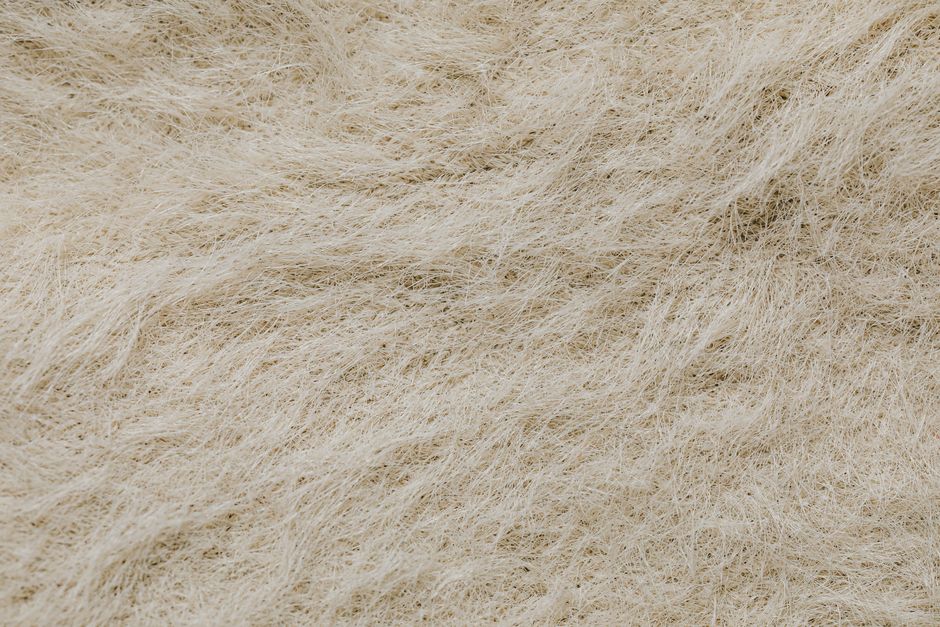
How can you choose wool that does not itch?
- Read the label for micron count. Not every brand lists it. Where it is given, lower is softer.
- Touch before you commit. Rub the cloth along your inner wrist or the side of your neck for a minute. Thin skin shows prickle quickly.
- Look at the lining. Check that it covers the body and sleeves, and check what touches your neck.
- Judge the surface. A smooth, dense finish tends to feel better than a loose or hairy one.
- Plan your layers. If a collar or cuff is slightly rough, a soft layer underneath solves it (see below).
Do not expect washing to fix it. Washing does not change fibre diameter, so it will not make a coarse cloth finer. Good care keeps a coat looking its best, and our guide on how to care for a wool coat covers it.
Layering: the easy fix for an itchy wool coat
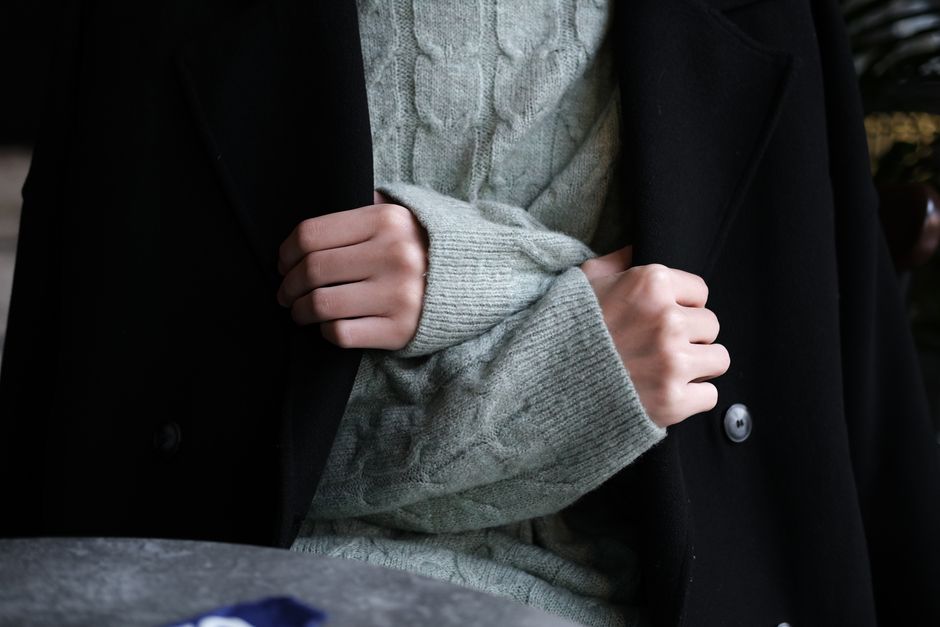
A barrier layer stops fibre ends reaching your skin. Wear a smooth top with sleeves and a high neckline, such as a fine cotton or linen tee, a silk camisole under a shirt, or a lightweight polo neck. Add a scarf in a soft fabric if the collar sits against your neck. If you like the idea of linen under wool, our guide to wearing linen in winter is a related read. Leave room for the extra layer. Our wool coat fit guide is a useful companion.
Related questions
Is merino wool less itchy?
Generally, yes. Woolmark says merino is soft because its fibres are exceptionally fine and bend easily against the skin. But merino is a range, not a guarantee. Coarser merino at the higher end of the range can prickle for very sensitive skin, and even a 100 percent merino garment can feel prickly where the fibre is coarse.
Is wool itchiness an allergy?
Usually not. The Acta Dermato-Venereologica review concluded that current evidence does not suggest wool fibre is a skin allergen, and contact allergy from lanolin is highly unlikely with modern wool garments. Lanolin allergy is a separate question, so raise it with a GP or dermatologist if you suspect it. This article is general information, not medical advice. If you get a persistent rash or skin reaction, speak to a doctor.
How can you choose wool that does not itch?
Look for fine, evenly graded cloth and a smooth finish, and do the wrist-or-neck test. Check that the lining is full and that the neckline has a soft layer between it and your skin. Layering underneath removes most of the remaining risk.
Why does wool itch more in some people than others?
Sensitivity varies from person to person, and so does the thickness of the cloth. The same coat may feel fine at the body and scratchy at the neck. If wool bothers your skin every time, however fine it is, ask a doctor rather than guessing.
At ANAHIV, our wool coats, blazers and jackets are made to order for autumn and winter, and each piece is made only after you place your order. You can browse them in Jackets, Blazers & Coats. Standard and custom sizes are available, so there is room for the soft layers that keep wool comfortable.