


The numbers are hard to argue with. According to ThredUp's 14th Annual Resale Report, the global secondhand apparel market is projected to reach $393 billion by 2030, growing at roughly twice the pace of overall clothing retail. In the US alone, American resale grew nearly four times faster than traditional clothing retail in 2025. The Business of Fashion and McKinsey's State of Fashion 2026 report confirms it: secondhand sales are expected to grow two to three times faster than the primary market between now and 2027. Resale isn't a trend. It has become the fastest-growing segment of global retail.
And yet, buried inside all this optimism is a question the data quietly raises — one that nobody in the resale industry really wants to answer: what are we reselling, and does it last long enough to matter?
Why People Are Actually Shopping Secondhand (It's Not What You Think)
Here's a finding worth sitting with. After more than a decade of "shop secondhand to save the planet" messaging, multiple consumer reports in 2026 now rank the real reasons people buy pre-loved clothing in this order: value for money, quality, uniqueness, and convenience — with sustainability trailing at the bottom of the list. The environmental argument, it turns out, isn't what's driving most carts to checkout.
That doesn't make the resale boom less meaningful. Nearly 80% of Gen Z and Millennials now identify as participants in the recommerce movement, and the psychological shift is real: Gen Z and Millennial consumers no longer treat clothing as a sunk cost. They're buying with future resale value in mind. They want pieces that will hold up — in quality, in craftsmanship, in relevance — long enough to be worth passing on. And that changes everything about how we should think about what we buy new.
The Quiet Problem at the Heart of the Resale Market
The secondhand market's explosive growth is, in large part, fuelled by the sheer volume of clothing that already exists in the world — most of it produced at speed and at low cost. Fast fashion's business model has always depended on disposability. The irony is that the pieces flooding resale platforms are often the same garments that weren't designed to last — pilling after three washes, losing shape by the second owner, and ending up in landfill anyway, just one stop later.
Mid-range items make up approximately 45% of resale volume, and much of that is clothing bought impulsively, worn rarely, and offloaded quickly. The circular loop sounds clean in theory. In practice, it often just extends the life of a poorly made garment by a few months before it becomes waste regardless.
Resale is not the problem — it's genuinely part of the solution. But it works best when the clothes entering the cycle were made to survive it.

The Case for Buying Better Before You Buy Secondhand
This is where slow fashion stops being a lifestyle aesthetic and starts being a practical argument. If you're going to invest in something new — whether that's a linen dress that moves with you through a decade of summers, or a linen co-ord you'll style fifty different ways — it should be made to last long enough to have a second life, a third, maybe more.
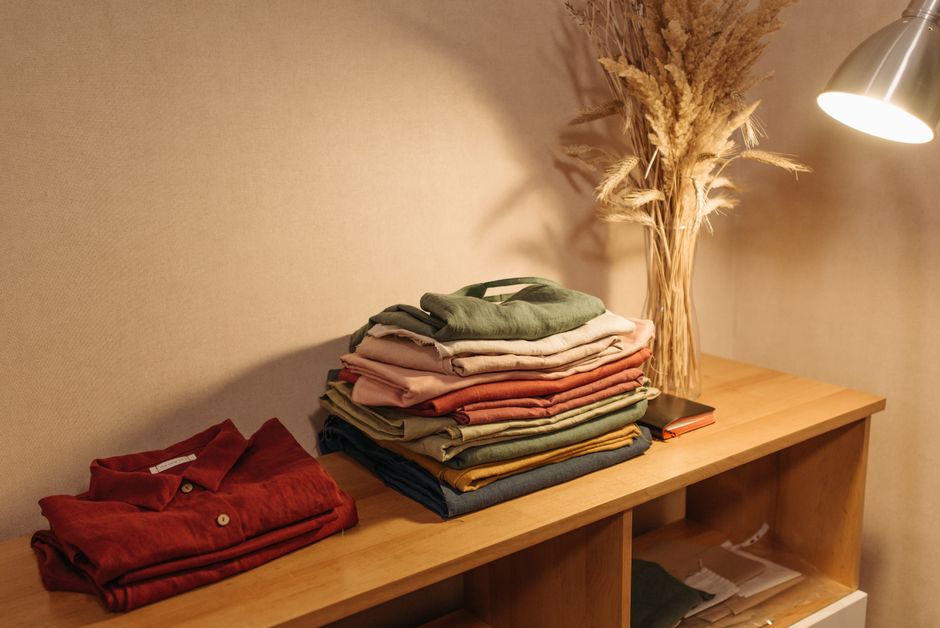
Linen is one of the few fabrics that genuinely improves with age. It softens with every wash, holds its structure across years, and biodegrades naturally at end of life. A well-made linen garment produced slowly, to order, from quality fabric is exactly the kind of piece the resale market is most hungry for — and the kind of piece that, if it never reaches a resale platform because you simply can't bear to part with it, has still done its job impeccably.
At ANAHIV, everything is made to order. Nothing sits in a warehouse waiting to be discounted, donated, or quietly destroyed. When you place an order, your garment is made for you — your measurements, your timeline, your piece. There is no overproduction. There is no surplus. The waste that fast fashion generates before a single customer even sees a garment simply doesn't exist in this model.
What "Buying with Resale Value in Mind" Really Means
The 2026 consumer shift toward buying with future resale value in mind is one of the most interesting behavioural changes fashion has seen in years. But resale value isn't just about brand name recognition — it's about quality signals. Natural fibres. Handcrafted details. Timeless silhouettes. The kind of hand embroidered tops that look as considered on a resale platform as they do on the day they arrive. The kind of linen maxi dresses that photograph beautifully five years from now because they were never designed around a microtrend.
These are the pieces with staying power — not because they've been marketed that way, but because the materials and the making process genuinely support longevity.
The Smarter Loop
The secondhand boom is a meaningful signal. It tells us that consumers are rethinking the linear relationship with clothing — buy, wear briefly, discard. They want a loop. They want garments that move, that hold value, that belong to more than one chapter.
But for the loop to actually work — for fashion to move toward something genuinely circular rather than just slower to landfill — the clothes entering it need to be worth circulating. That starts with choosing well the first time. It starts with made-to-order over mass-produced. With natural fibres over synthetics. With craft over convenience.
The resale market will keep growing. The State of Fashion 2026 is clear on that. What it can't guarantee is that the clothes being resold were worth making in the first place. That part is still up to us — and the brands we choose to buy from.