


Fashion has always moved in cycles — hemlines rise and fall, colours come back around, silhouettes repeat themselves every decade or so. But the cycle that matters most right now has nothing to do with trends. It's about something far more fundamental: what actually happens to our clothes after we're done with them.
The circular fashion movement is one of the most significant shifts happening in the industry today, and in 2026, it has well and truly crossed over from niche sustainability conversation into the mainstream. If you've been hearing the term more often lately, there's a reason for that — and it's worth understanding properly.
What Is Circular Fashion, Exactly?
The concept was first formally defined by sustainability researcher Anna Brismar, who described circular fashion as clothing designed, sourced, produced, and provided with the intention to be used and circulated responsibly and effectively for as long as possible — and to return safely to the biosphere when no longer of human use.
In simpler terms: circular fashion is the opposite of the disposable model most of us have grown up with. Everyday clothes shouldn't be made to be thrown away after three wears. They should be made to last, to be repaired, passed on, resold, and eventually — when they've truly lived a full life — broken down and returned to the earth or transformed into something new.
The conventional fashion system works on a linear model: take raw materials, make clothes, sell them cheaply, and watch consumers discard them quickly so they come back for more. It's an extractive loop that generates enormous waste. The industry currently produces an estimated 92 million tonnes of textile waste every year — a number that's difficult to fully comprehend.
Why It's Gaining So Much Momentum Right Now
Circular fashion isn't just gaining moral currency — it's becoming an economic force. The global circular fashion market is growing at a compound annual growth rate of around 8.7–9.2%, with some projections placing its value at over $15 billion by 2033. That kind of growth doesn't happen without real structural change behind it.
Part of what's driving this is regulatory pressure. In 2026, enforceable rules are arriving: the EU has moved to ban the destruction of unsold textiles, and extended producer responsibility laws are now requiring brands to actually manage what happens to their garments at end of life. Brands that ignore this shift face fines and eroded consumer trust — and forward-thinking labels are finding new revenue in resale and repair models instead.
But the shift isn't only top-down. Consumer expectations have genuinely changed. People are increasingly drawn to brands that are transparent about how they make things and honest about why longevity matters. Circularity resonates because it aligns with something many of us already feel intuitively: that buying more, faster, is not making us feel better — about our wardrobes or the world.

The Four Pillars of Circular Fashion
Circular fashion isn't one thing. It's a set of interconnected principles that together create a closed loop rather than a dead end. Here's how those principles break down:
- Design for longevity. Circular fashion starts at the very beginning — in the design stage. Garments are made from durable materials, with construction techniques that support reuse and eventual recycling. Fast fashion's race to the bottom on price is fundamentally incompatible with this idea.
- Keep clothes in use longer. This means repairing rather than discarding, reselling rather than binning, and building wardrobes intentionally rather than impulsively. Circular business models — repair services, resale platforms, take-back schemes — make this easier at scale.
- Choose natural and recyclable materials. Natural materials currently hold over 40% of the circular fashion market, and for good reason. Fibres like linen, which is plant-based and biodegradable, align naturally with circular principles — they don't shed microplastics, they don't require chemical-heavy processing, and at end of life they can return to the earth without leaving a toxic legacy.
- Reduce waste at the point of production. This is where made-to-order models come in. One of the industry's dirtiest secrets is overproduction — brands manufacturing far more than they can sell, then destroying or landfilling the excess. The new rules of sustainable fashion push brands to produce in smaller batches and use pre-order or made-to-order models wherever possible.
Made-to-Order Is Circular Fashion in Action
At ANAHIV, we've built the entire brand on made-to-order production — not because it's easy (it isn't), but because it's the most honest way we know to make clothes. Nothing is produced until someone orders it. There's no warehouse full of garments sitting in sizes that might never sell. There's no end-of-season fire sale because we overestimated demand. Every linen dress we make exists because a real person wanted it.
This is circular thinking applied at the source. It won't solve every problem in fashion — no single approach can — but it eliminates one of the biggest ones: the waste created before a garment ever reaches a customer's hands.
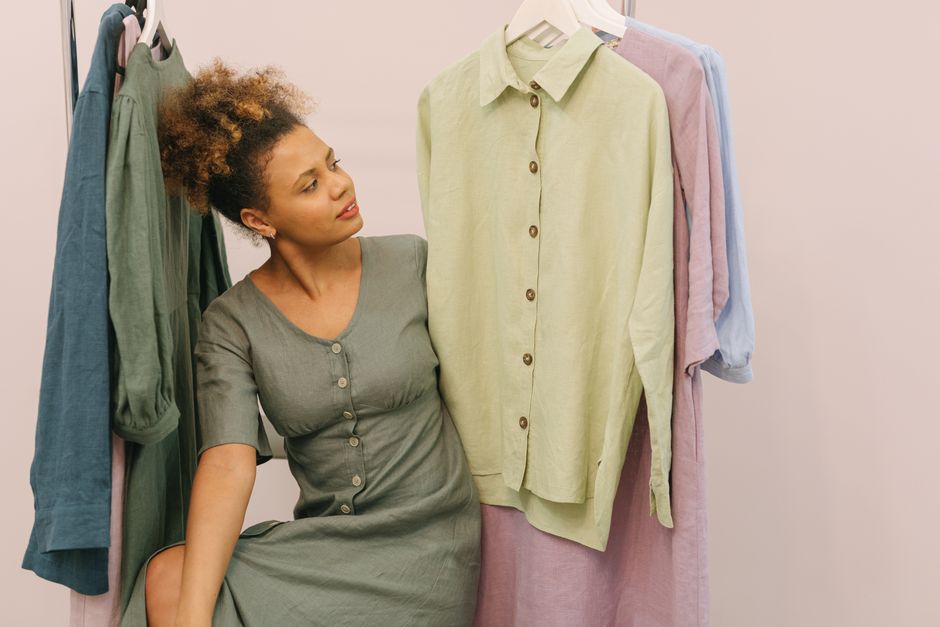
Our choice of linen as our primary fabric is equally deliberate. Linen is made from flax, a crop that requires no irrigation and very little pesticide, and it's fully biodegradable. A linen midi dress or a set of linen napkins will outlast most synthetic alternatives by years — and when they've finally run their course, they won't outlast us on the planet.
What You Can Do as a Consumer
The circular fashion movement isn't only the responsibility of brands. Consumers are a crucial part of the loop. Here's how to engage with it practically:
- Buy less, but better. Choose versatile, well-made items designed for longevity rather than following every passing trend. One considered purchase is worth more — in every sense — than five impulsive ones.
- Care for what you own. Extending a garment's life through proper care, quick repairs, and mindful storage is one of the simplest ways to reduce your fashion footprint. How you wash, store, and maintain your clothes matters.
- Resist the urge to discard. Before you throw something out, consider: can it be repaired? Resold? Donated? Repurposed? Keeping clothes in use for even nine extra months can significantly reduce their environmental impact.
- Support brands that design for longevity. Every purchase is a vote. Choosing made-to-order, natural fibres, and slow fashion over fast-fashion volume is a meaningful act — even if it doesn't feel dramatic.
The Bigger Picture
Circular fashion is not a perfect system — the infrastructure to support it at full scale is still being built, and even the most well-intentioned brands are working within the constraints of an industry that has been extractive for a very long time. But the direction of travel is clear, and in 2026, it has shifted from being a sustainability ambition to an emerging operational priority for fashion supply chains worldwide.
What feels most hopeful about the circular fashion movement is that it reframes the entire relationship between people and clothes. Instead of clothes being cheap, disposable, and replaceable, they become things worth caring for — things with stories, with craftsmanship, with a life beyond the first wear. That's not just better for the planet. It's a genuinely more beautiful way to dress.