


You've invested in a beautiful piece of linen clothing — a flowing linen dress, a crisp linen top, a perfectly draped co-ord set. And then comes the first wash. The hesitation is real. Will it shrink? Will it crumple beyond rescue? Will it ever look the same again?
Here's the truth: linen is not nearly as fragile as people fear. It is, in fact, one of the most durable natural fibres on earth. But it does have a few quirks worth knowing. Once you understand how linen behaves with water and heat, caring for it becomes second nature — and your pieces will only get softer, more beautiful, and more characterful with every wash.
Why Linen Shrinks (And When It Doesn't)
Linen is made from flax fibres, which contain natural tension built up during the manufacturing process. When those fibres meet water and heat, they relax and contract — which is what causes shrinkage. This is most pronounced during the very first wash, when the fibres are settling into their natural state for the first time.
The good news? Most of the shrinkage a linen garment will ever experience happens in that first wash. After that, if you care for it correctly, the changes are minimal. Pre-washed linen — like the fabric used across our linen dresses — is already stabilised, keeping shrinkage to a much smaller range of 2–3% even with regular machine washing.
Raw, untreated linen is a different story: dried on high heat, it can shrink by up to 10%, altering the fit significantly. This is why the drying method matters just as much as the wash itself.
How to Wash Linen Without Shrinking It
Follow these principles and your linen will hold its shape, its colour, and its drape — wash after wash.
- Use cool or lukewarm water. Hot water is the primary cause of linen fibre contraction. Stick to 30°C–40°C at most. Very cold water isn't ideal either — lukewarm is the sweet spot that cleans effectively without shocking the fibres.
- Choose a gentle or delicate cycle. Excessive agitation puts mechanical stress on linen fibres, causing them to tighten and shrink. A gentle cycle with reduced spin keeps everything calm.
- Use a pH-neutral, plant-based detergent. Harsh alkaline detergents strip the natural protective layer from flax fibres, weakening them over time. A mild detergent that is pH neutral, free of sulfates and phosphates, and ideally plant-based will clean your linen beautifully without degrading it. And skip the fabric softener entirely — linen naturally becomes softer and more supple with every wash.
- Don't overstuff the machine. Give your linen room to move. Overcrowding causes unnecessary friction and balling, which leads to both shrinkage and stubborn wrinkles.
- Air dry, always. This is the single most important rule. Hang your linen immediately after washing — give it a good shake first to release major creases — and let it air dry naturally in the shade. Direct sunlight can fade colours over time, though it does gently bleach whites.
- Remove while slightly damp. If you do use a dryer (low heat only, on a delicate setting), take the garment out while it's still slightly damp and hang it immediately. Fully drying linen in a machine makes it stiff and sets wrinkles deep into the fabric.
And if the unthinkable happens and something does shrink? Soak it in lukewarm water with a small amount of mild detergent or baby shampoo for 10–15 minutes to allow the fibres to relax, then gently stretch it back to shape while damp and lay flat to dry.
The Wrinkle Question — And Why It's Not Really a Problem
Linen wrinkles. This is simply part of its nature, and for most linen lovers, those soft, lived-in creases are part of the fabric's considerable charm. The relaxed texture of a well-worn linen dress or a pair of linen trousers is not a flaw — it's the look.
But sometimes you want something a little smoother. Here's how to get there, without an iron in sight.
How to Remove Linen Wrinkles Without an Iron
There are several easy, effective methods — choose the one that suits your morning or your moment.
- The shower steam method (easiest of all). Hang your linen garment in the bathroom while you take a hot shower. Close the door to trap the steam, keep the garment away from water splashes, and leave it for 10–15 minutes. The steam relaxes the fibres naturally. Smooth it out by hand and let it hang dry. This works beautifully for linen midi dresses and longer pieces.
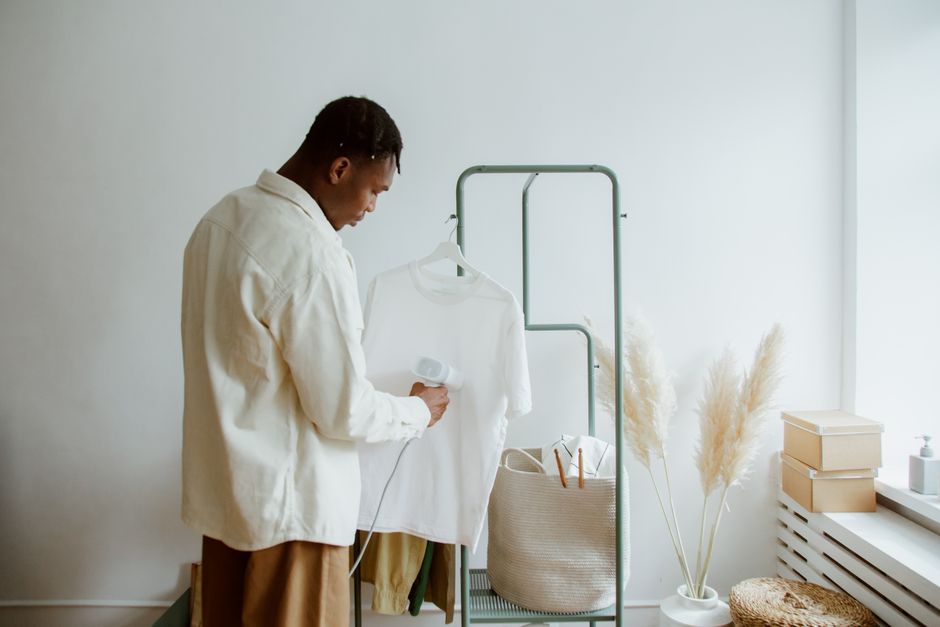
- A handheld garment steamer. Steam is genuinely the kindest tool for linen. Unlike a hot iron pressed directly onto the fabric, a steamer avoids dulling or flattening the texture. Hang the garment, hold the steamer a few inches from the fabric, and move it slowly from top to bottom. Let the piece hang for a minute after to cool and set.
- The damp towel dryer trick. Toss the wrinkled garment into the dryer with a clean, damp towel on a low-heat setting for 10 minutes. The steam created by the towel relaxes the creases. Remove immediately when the cycle ends, hang it up, and smooth any remaining wrinkles with your hands.
- A water mist and gravity. The simplest method of all: lightly mist the wrinkled areas with a spray bottle of plain water, smooth gently with your hands, and hang the garment. Gravity and the damp fibres do the work as the piece dries. For embroidered pieces from our hand embroidered tops collection, this gentle approach is especially recommended — never press directly over embroidery.
- Hang it right out of the wash. The most effective anti-wrinkle strategy is prevention. The moment your linen comes out of the wash, shake it well, smooth it with your hands, and hang it immediately. As linen air dries, it relaxes under its own weight — and you'll find you need very little intervention at all.
A Note on Linen and Embroidery
If your linen piece features hand embroidery — thread work or sequin embroidery — treat it with extra care. Always turn the garment inside out before washing. Never apply direct heat, steam, or pressure over embroidered areas. When storing, fold gently with tissue paper between the embroidered sections to prevent thread snags.
The Beautiful Truth About Linen and Longevity
Linen is one of the very few fabrics that actually improves with washing. Each gentle wash softens the fibres further, deepens the drape, and gives the fabric that incomparably relaxed, lived-in quality that no new garment has on day one. A well-cared-for linen piece doesn't wear out — it matures.
This is precisely why linen is the fabric of choice for slow fashion: when you invest in a well-made piece and know how to care for it, you're investing in something that lasts for years, not seasons. Browse our Everyday Ease collection for linen pieces designed to be worn often, washed gently, and loved for a long, long time.