


There is a number that should stop every fashion lover in their tracks: 87%. That is the share of all clothing materials and fibres that will end up in an incinerator or a landfill. Not eventually — inevitably, by design. Between 80 and 100 billion new clothing garments are produced every year, most of them made speculatively, shipped in bulk, and discounted when they don't sell fast enough. The fashion industry, as we inherited it, was never built around you. It was built around volume.
Made-to-order is the quiet, radical alternative to all of that. It is also, at its core, a much more honest way to make something. Here is what it actually means — and why it changes everything from the factory floor to your wardrobe.
The Problem with Making Clothes Nobody Asked For
Conventional fashion runs on prediction. Brands forecast what they think customers will want months in advance, order thousands of units from factories, and then spend the rest of the season hoping they were right. When they aren't — which is often — the fashion industry loses $70 billion yearly from unsold inventory, much of which ends up in landfills. That waste is not an accident or an oversight. It is structurally baked into a system that values speed and scale above all else.
The environmental toll is staggering. The fashion industry contributes to nearly 10% of global carbon emissions and 93 billion cubic metres of water waste annually. And only 1% of clothes will ever get recycled into new garments — meaning nearly everything produced eventually becomes refuse. Fast fashion doesn't just cost the planet; it costs consumers, too, who are increasingly left holding cheap, poorly made pieces that fall apart within months.
What Made-to-Order Actually Means
Made-to-order is exactly what it sounds like: a garment is only cut, sewn, and finished after a real person places a real order. There is no warehouse full of unsold stock. There is no seasonal clearance. There is no guesswork.
At ANAHIV, every piece — from our linen dresses to our hand-embroidered tops — begins its life the moment you choose it. The fabric is pulled, the pattern is laid, and the making begins. That single shift in sequence changes the entire footprint of the garment.
Here is what that process looks like, step by step:
- Order placed. Your size, your choice of colour or silhouette — everything is confirmed before a single thread is cut.
- Fabric sourced and cut. Only the amount of fabric needed for your specific piece is used. Offcuts are kept minimal and repurposed where possible.
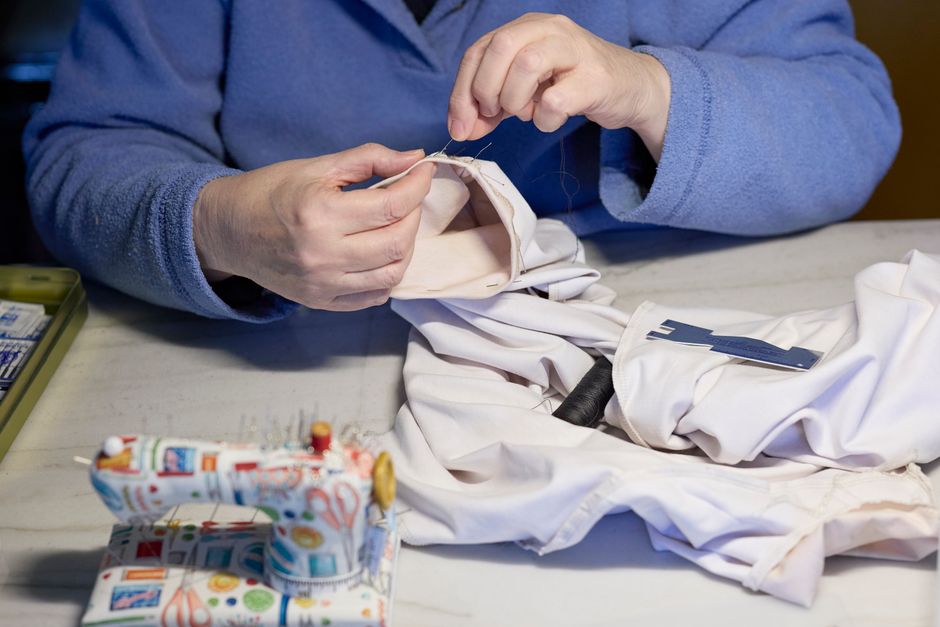
- Stitching and construction. Each garment is sewn by skilled artisans, not churned out by automated assembly lines optimising for speed.
- Hand embroidery, if applicable. For embroidered pieces, this stage alone can take several hours to complete — a quiet, deliberate act of craft that cannot be rushed.
- Quality check and finishing. The garment is reviewed, pressed, and prepared specifically for you.
- Dispatch. Your piece leaves for you — and only you.
The typical timeline from order to dispatch is 8 to 10 days. That is not a delay — it is the time it takes to make something properly.
Why It Fits Better, Too
Beyond the environmental case, made-to-order also solves one of the most persistent frustrations in fashion: fit. When clothes are produced in bulk, they are graded across sizes using averaged measurements that rarely reflect a real body. The result is garments that technically come in your size but don't quite feel like they were made for you.
Because every ANAHIV piece is made fresh to your order, the construction is not rushed or compromised to meet a production quota. The seams are finished properly. The proportions are respected. Whether you're choosing a relaxed linen midi dress or a tailored linen co-ord set, the care taken in production is tangible — in the way it drapes, the way it moves, the way it holds its shape wash after wash.
No Stock Means No Waste — By Design
ANAHIV doesn't hold stock. This is not a limitation; it is the entire point. Every garment that exists in the world exists because someone wanted it. There are no end-of-season sales to shift excess inventory, no pieces buried in landfill because a trend shifted. Clothing and textiles currently make up at least 7% of the total amount of waste in global landfill space — and the made-to-order model directly refuses to contribute to that number.
This is what slow fashion actually looks like in practice. Not just organic certificates or recycled hang tags — a fundamental restructuring of when and why a garment gets made.
The Real Meaning of Slow Fashion
In 2026, fashion is shifting away from the noise of disposable style toward a more empathetic, human-centric model of consumption. Made-to-order sits at the centre of that shift. It asks both the maker and the buyer to pause — to think before producing, to choose before consuming.
When you order from ANAHIV, you are not pulling a ready-made item off a shelf. You are commissioning something. That word — commission — carries real weight. It means your piece was made because you wanted it, by hands that knew they were making it for someone. That relationship between maker and wearer is one of the oldest and most meaningful in human culture. Made-to-order simply brings it back.
Explore our latest arrivals — each one waiting to be made, just for you.