


For years, the fashion industry assumed Gen Z was a contradiction: a generation that said it cared about the planet while still filling its cart on fast fashion apps. The latest research tells a far more nuanced — and more hopeful — story. Gen Z isn't confused about its values. It's simply waiting for the industry to catch up.
The Numbers That Should Change How Every Brand Operates
The data from 2026 is striking. According to a March 2026 consumer behaviour report, 73% of Gen Z shoppers say they have abandoned a purchase after discovering a brand's poor environmental record. This isn't a fringe position — it's a majority stance. Sustainability, the report notes, has become "a baseline expectation, not a differentiator."
And it's not just about environmental claims. Research compiled in April 2026 found that 73% of Gen Z want companies to be transparent about their sustainability efforts, while 45% say they are actively concerned about greenwashing. This generation grew up with search engines and social media fact-checking at their fingertips — they know when a brand is performing sustainability rather than practising it.
The Intention–Behaviour Gap Is Closing — But Slowly
Academic research has long pointed to a frustrating paradox: Gen Z consumers express strong environmental values but don't always act on them at the checkout. A 2026 study published in the Journal of Business Research identified this as the "intention–behaviour gap" — where high sustainability awareness doesn't automatically translate into consistent purchasing decisions.
But the barriers are real and worth understanding. A January 2026 Springer study focused on Indian Gen Z consumers found that limited availability, price sensitivity, and greenwashing confusion are among the key factors that stop even motivated young shoppers from making ethical choices. The problem, in other words, is not a lack of values — it's a lack of accessible, trustworthy options.
This is precisely why made-to-order brands, slow fashion labels, and transparent independent makers are increasingly well-positioned. They offer something the algorithm-driven giants simply cannot: proof. When a brand makes each piece only after it's ordered — eliminating overproduction from the equation — the sustainability story tells itself.

What Gen Z Is Really Looking For
Strip away the trend forecasts and what emerges is a generation that treats clothing as communication. Runway Magazine's 2026 analysis puts it clearly: young shoppers evaluate garments "not only by design but also by production transparency, material sourcing, and longevity." Fashion is no longer just aesthetic — it's a statement of ethics.
That shift has enormous consequences for brand loyalty. The same consumer report found that repeat purchase rates are 2.4 times higher for brands Gen Z perceives as authentic — loyalty earned not through discounts or heritage, but through values alignment and genuine two-way dialogue. Brands that take clear stances and back them up operationally are the ones building real, lasting relationships with this cohort.
At ANAHIV, this is the philosophy we've built from the ground up. Every linen dress is made to order — meaning nothing is produced speculatively, nothing sits in a warehouse waiting, and nothing ends up incinerated at a season's end. It's not a marketing position. It's how we work.
The Greenwashing Problem — And Why It Matters More Than Ever
One of the most significant findings across recent research is how acutely aware Gen Z is of greenwashing. The 2026 consumer behaviour report describes Gen Z as "the first generation to systematically fact-check brand claims using social media" — and notes that perceived greenwashing "triggers active avoidance." Vague sustainability claims, recycled-looking packaging on otherwise conventional products, and one-off charity partnerships no longer cut it.
What does resonate? Specificity. Behind-the-scenes honesty. Production models that are verifiably low-waste by design. A 2026 trend analysis noted that Gen Z "scrolls past fast fashion that feels empty, craving pieces that carry a story, not just speed" — and that "smaller, authentic creators are winning" by turning transparency into the new luxury.
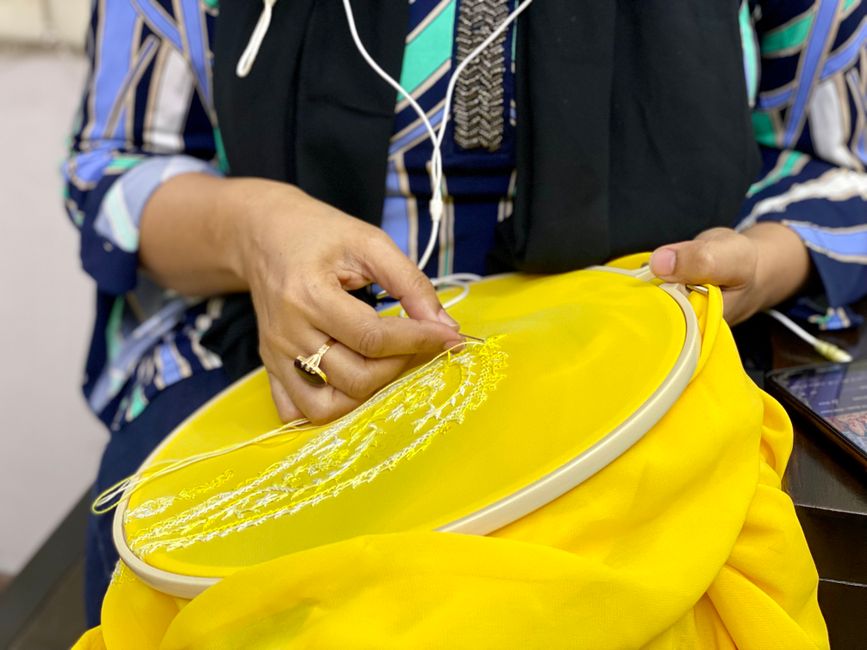
That's a compelling case for the kind of handcraft that has always defined slow fashion. Our hand embroidered tops — worked stitch by stitch by skilled artisans — carry a story that no algorithm can replicate. The hours of work, the human hands behind each motif, the decision not to outsource to machine embroidery: these are not just details. For a generation that fact-checks brand claims, they are the brand claim.
From Awareness to Action: What Slow Fashion Brands Can Offer
The research points to a clear opportunity — not just for brands, but for consumers themselves. If the intention–behaviour gap persists partly because trustworthy, accessible slow fashion options are hard to find, then discovering and supporting the brands that genuinely operate differently becomes its own act of change.
Choosing a linen midi dress made to your order in natural fabric, by a brand that produces nothing it hasn't already sold, is a purchase with a measurable impact — less waste, less water, less carbon than the equivalent mass-produced garment. It's also, increasingly, the kind of choice that feels right to an entire generation redefining what value in fashion actually means.
Gen Z isn't the problem the fashion industry thought it was. It's the clearest signal the industry has ever received about where it needs to go. And for the slow, intentional, transparent brands already working that way — the moment has arrived.
Explore our made-to-order linen collections and everyday pieces designed to last well beyond a single season.