


There is something quietly transformative about sitting down to a table that has been set with intention. Not elaborate, not fussy — just thoughtful. A cloth that drapes softly, napkins folded loosely, the natural texture of linen catching the afternoon light. It is the kind of detail that turns an ordinary Tuesday dinner into something worth slowing down for.
Linen at the table is not a new idea. But it is a very relevant one right now. The global table linen market is on a strong upward trajectory, and a significant part of that growth is being driven by exactly what you might expect: a consumer shift toward reusable, natural, eco-conscious home linen over disposable or synthetic alternatives. Farmhouse linen tablecloths consistently rank among the most praised categories for their style and sturdiness, and linen napkins are increasingly seen not as a luxury, but as a practical, lasting choice.
Why Linen Belongs on Your Table
Before we get into the how, a word on the why. Linen is made from the flax plant, which requires significantly fewer pesticides and less water than cotton to grow. It is biodegradable, breathable, and — crucially — it gets better with age. Unlike paper napkins that end up in the bin after one use, a well-made linen napkin can last decades. That is not a small thing.
Linen also has a quality that is hard to name but instantly recognisable: it makes a table feel both relaxed and considered at the same time. It does not try too hard. It simply is.
Everyday Meals: The Unfussy Table
The best argument for using linen daily is that it asks very little of you. Lay a tablecloth across your dining table in the morning and your meals — breakfast, lunch, whatever you manage — automatically feel more grounded. There is no need for matching sets or colour-coordinated everything.
In fact, the most current styling approach leans deliberately away from perfection. Tables in 2025 and 2026 are described as "more collected than coordinated" — a mix of textures, imperfect folds, colours that complement rather than match. This is excellent news if you have been putting off buying table linen because it all seemed too formal or complicated.
For everyday use, try a neutral tablecloth — undyed, warm ivory, or soft grey — paired with linen napkins in a slightly contrasting tone. Earthy terracottas, muted sage, and warm ochre are all on-trend right now, and they layer beautifully against a natural linen base.

Weekend Hosting: Layering With Purpose
When you are hosting — a long Sunday lunch, a birthday brunch, a casual dinner with friends — the table becomes part of the experience. Linen gives you a foundation that works with almost anything you layer on top of it.
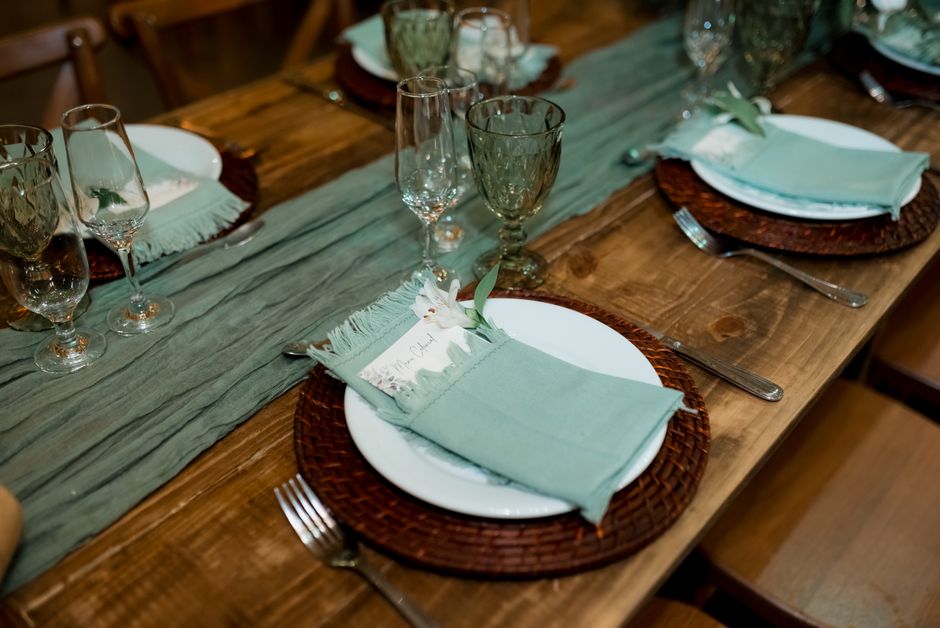
Start with a linen tablecloth as your base. Then bring in texture: a linen table runner in a deeper tone, mismatched placemats, napkins folded casually beside each plate or tucked into a glass. The mix-and-match approach — pairing solid tablecloths with subtly different napkins, or playing with a bold coloured runner against a neutral base — is one of the defining table trends of this moment.
A few details worth keeping in mind:
- Napkin folds: You do not need origami skills. A simple pocket fold, a loose roll, or even just a relaxed rectangle beside the plate looks elegant in linen because the fabric has natural weight and drape.
- Colour temperature: Warm tones (terracotta, rust, amber) feel welcoming and intimate. Cool tones (dusty blue, sage, stone) feel calm and modern. Pick one direction and stay loose within it.
- Layering placemats: Placemats under each setting add structure and protect the tablecloth — and they are easy to swap out between meals if something spills.
Formal Dinners and Special Occasions
Linen is sometimes overlooked for formal settings in favour of more obviously "fancy" fabrics. But linen has a quiet authority that suits a dinner party beautifully. The key is in the details — pressed or steamed cloth, napkins folded crisply, a unified colour palette that feels intentional rather than thrown together.
For a considered dinner table, keep the tablecloth itself understated — crisp white, warm ivory, or a deep natural stone. Let the napkins carry a hint of colour or texture. Candlelight and linen are a combination that has genuinely never gone wrong.
It is also worth noting that consumers are increasingly seeking handmade or artisanal pieces for their homes. Hand-block printed linens and embroidered details are a growing part of the home textile conversation — small touches that add depth and make a table feel genuinely personal rather than styled from a catalogue.
The Practical Side: Caring for Table Linen
One of the reasons people hesitate with linen at the table is the perceived maintenance. In reality, linen is one of the most practical fabrics you can own. It is highly absorbent, machine washable, and — unlike cotton — it does not hold stains in the way you might fear. A cool machine wash, a shake out while damp, and linen dries quickly and naturally.
The texture softens beautifully over time and with repeated washing. What feels slightly crisp and new when you first unfold a tablecloth will gradually become the softest, most lived-in thing on your table. That patina of use is exactly what makes linen feel like an heirloom rather than a purchase.
A Small Shift That Changes Everything
Swapping paper napkins for linen ones is one of those seemingly minor household changes that turns out to have a disproportionate effect — on how your table looks, on how meals feel, and on how much single-use waste your home generates. It is a small act that embodies something larger: the decision to choose things that last, that age well, and that bring genuine pleasure into everyday life.
That is what good home linen is about. Not performance. Not occasion. Just the quiet, lasting satisfaction of things made beautifully and used often. Explore the ANAHIV Home and Living collection — linen tablecloths, napkins, and placemats, made to order in India and designed to last a lifetime.